I have some tips when it comes to How to Choose and Care for a Knife. There is no tool in my kitchen that I use more than my knife. A good quality knife makes a cook’s life a whole lot easier! (This post contains affiliate links through my association with Amazon.com)
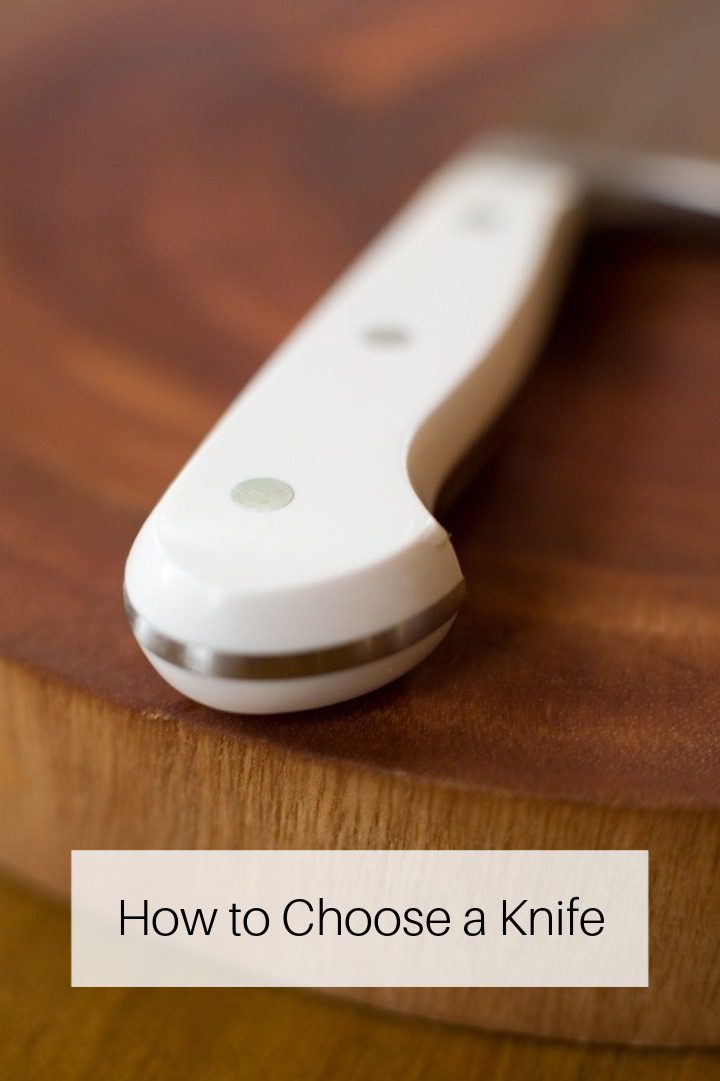
How to Choose and Care for a Knife:
I will just come right out and tell you that my students use Wusthof 8″ classic chef’s knives in all my classes, and I use the 8″ Wusthof Ikon Chef’s knife at home. But whatever knife you choose to use, here are some important tips for choosing and caring for a good knife.


1. Choose a knife with a “full tang” blade:
“Full tang” means the blade runs from the tip of the blade to the end of the handle in one piece. Blades that are screwed in at the handle break quickly. A good knife should last your lifetime. Trust me, choosing a cheap knife will just mean you replace it over and over and end up spending more in the long run.

2. Be sure the knife you choose is hand forged from a block of steel and not machine stamped out of stainless steel:
Hand forged knives are softer which means they need to be honed after every use and sharpened once or twice a year. You can buy the honing tool and sharpener along with your knife, and/or take your knife in for professional sharpening as needed. Knives stamped out of stainless steel stay sharper longer but are much more difficult to sharpen once they dull. And they just plain don’t feel good when using. Softer steel needs to be sharpened more often. but are definitely the better choice!

3. Always use a wooden cutting board:
I know, I know the media has convinced you wood is not safe, but I believe it’s fine as long as you care for your board properly. I use a separate board for poultry, meat and fish and wash it with hot water and soap, then wipe it down with an antibacterial wipe and wash it again. Plastic, glass and bamboo cutting boards dull knives too quickly. If your knife isn’t marking your board, your board is marking your knife!

4. Keep your blade sharp between visits to a professional knife sharpener:
A sharp knife is safer than a dull knife and obviously lessens the effort on your part. Using a honing tool after each use keeps your knife keeps a “straight edge” without actually removing steel like sharpening. I use a honing tool after every use and a sharpener once or twice a year.

While my 8″ chef’s knife is my most used kitchen tool, I also use a serrated knife for tomatoes and bread …

…and a meat carving knife for beef and poultry.

I do occasionally use a paring knife for peeling fruit as well. The cheapest way to go is to buy a set. This one comes with an 8″ chef’s knife, a meat knife and a paring knife.
5. Washing and Storage:
Always wash with hot water and soap and dry it completely before storing knife either in it’s sheath or hanging on a magnetic strip. Dishwashers are not recommended!
I hope you learned a little about choosing and caring for a knife. When you choose, choose wisely and you will love your knife for years to come!
Need To Practice Your Knife Skills?
Try your new knife on these recipes!

MAY I PLEASE ASK A FAVOR?
We small bloggers need all the help we can get. Subscribing and sharing on social media is very appreciated!
STANDARD FTC DISCLOSURE and Privacy Policy: In order for me to support my blogging activities, I may receive monetary compensation or other types of remuneration for my endorsement, recommendation, testimonial and/or link to any products or services from this blog. Please note that I only endorse products that are in alignment with The Organic Kitchen’s ideals and that I believe would be of value to my readers.The Organic Kitchen is a participant in the Amazon Services LLC Associates Program, an affiliate advertising program designed to provide a means for sites to earn advertising fees by advertising and linking to Amazon.com. View The Organic Kitchen’s Privacy Policy

Pinning this now, so I’ll have it when I want to buy new knives. Thanks!