So What’s Up With Gluten Intolerance?
Great question! But before we get to gluten let’s take notice of that “subscribe” button to the right…I would love for you to click it:) Thank you, now back to the subject at hand…
What is Gluten and What is Gluten Intolerance?
Gluten is the protein found in wheat and anything made from wheat.
What is gluten intolerance? Contrary to popular belief gluten intolerance IS NOT AN ALLERGY. Because of “leaky gut syndrome” some people’s digestive systems can not digest gluten and that undigested protein is perceived as an intruder by the immune system. The immune system wages war against the perceived threat causing inflammation in the intestines and elsewhere in the body. Intolerance to gluten can be mild or life threatening depending on if you have a sensitivity to gluten or the auto-immune disease Celiac. The important thing to remember is whether you have a mild sensitivity or a more serious one, any sensitivity at all causes inflammation which can wreak havoc over time. To read more about inflammation click here and here.
So How Do I Know?
If you suspect you may have an intolerance simply live gluten free for a month and see if you notice a difference. Usually you will notice some improvement in the first week! Symptoms of gluten sensitivity include fatigue, headaches, fibromyalgia, bloating, constipation, diarrhea, IBS, mood swings, and neurological issues, dizzy spells and more. If you have serious symptoms and think you may have Celiac GO TO YOUR DOCTOR and get tested. Then learn everything you can and be vigilant, Celiac can be very serious. Other common foods sensitivities that cause similar symptoms are soy, corn, eggs, dairy, peanuts and artificial sweeteners. I recommend reading The Virgin Diet. This book explains food intolerances and how to weed out the offending foods.
If I have Gluten Intolerance Does That Mean I Can Never Eat Gluten Again?
Well yes…and/or no. Sometimes when you avoid gluten (or any food you have an intolerance to) for a long period of time the gut can heal and then the offending food may be reintroduced. If symptoms do not return you may be able to eat the food small amounts. But some people have to avoid offending foods forever, more on that here.
I am mildly gluten intolerant. Ialways do better when I give up gluten. I immediately lose 5 pounds of water weight, my eyes and skin look better, my joints are less achey and stiff (because inflammation decreases) and my tummy is happier. BUT the minute I start eating gluten again my symptoms return. So I try my best to live wheat free, sometimes I succeed for months at a time, sometimes I fail miserably and pay the price. Live and learn.
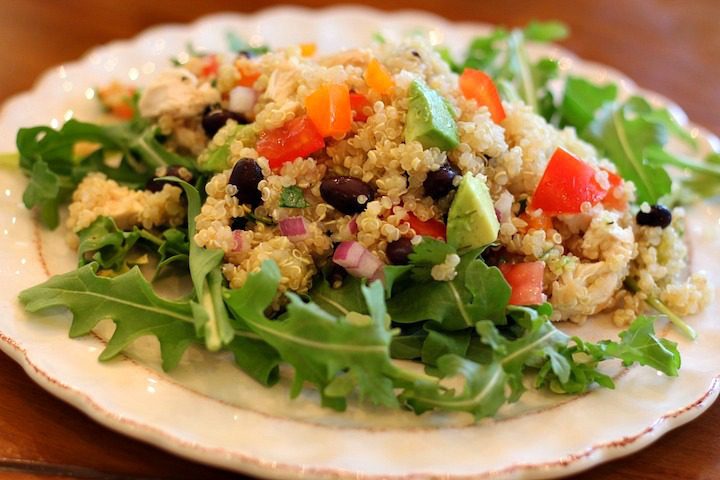
I felt you getting tense reading all this heavy info so I inserted a beautiful picture of a gluten free meal. Breathe, it’s all going to be ok.
Why are so many people gluten intolerant all of a sudden?
Well they’re not. Gluten sensitivity has always existed. But there are a couple of theories about why it is increasing. The one I mentioned above “leaky gut syndrome” is probably the most common culprit. Another very simple explanation is that in an effort to create a hardier variety of wheat the wheat in America has been modified from the lovely amber grain most of our ancestors consumed in Europe to a wheat much higher in gluten and therefore harder to digest. The over use of antibiotics and poor gut health due to unhealthy diets is also a problem. See this post The Rise of Gluten Intolerance for more. Now you may be thinking “If I am gluten intolerant what do I do?”
First, don’t panic!
Then, read this article about improving gut health. Then take comfort in the fact that there are lot’s of foods that don’t contain gluten! In fact the majority of foods do not! All vegetables, all fruits, all meats, chicken, fish, dairy and other grains such as quinoa, oats, corn and brown rice are gluten free! For more of a grain selection click here. You literally have hundreds if not thousands of gluten free choices! Really the only thing you have to avoid is wheat…which means breads, cookies, muffins, crackers, pastas are off the table (pun intended) if made with wheat flour. Did you notice a trend in the foods mentioned? Most foods that contain gluten are refined, devoid of nutrients and highly inflammatory, foods we might want to give up even if we aren’t intolerant! (If you have celiac you must be more careful than those with a simple intolerance and avoid ‘hidden gluten’ and cross contamination.)
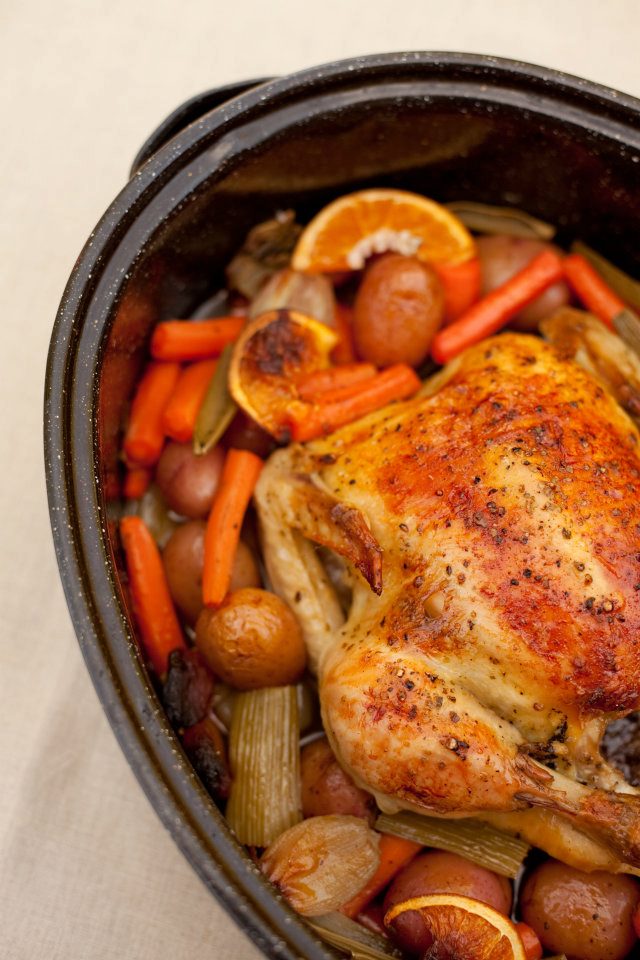
I sensed panic again so I inserted another beautiful meal photo above, and yes it’s gluten free. And it just so happens I have posted the recipe.
It’s all in the attitude!
If you discover you indeed have a gluten intolerance you can sit around crying because you can’t eat cake, cookies and bread made with wheat flour or you can celebrate feeling better, being thinner, and eating healthier food that gives you energy instead of sapping it. You may miss wheat products initially, but really it gets easier and as soon as you see and feel the difference it’s all worth it! I recommend eating foods that are naturally gluten free but if you feel the need for treats made with wheat flour substitutes you can find gluten free products and gluten free recipes everywhere. Just be careful not to substitute gluten filled junk foods for gluten free junk foods. The mission here is to eat nutritious ‘real food’ and give the gut the chance to heal. For tons of recipes click here to see my favorite gluten free blog. And now on to the recipe! I promise eating gluten free can be delicious!
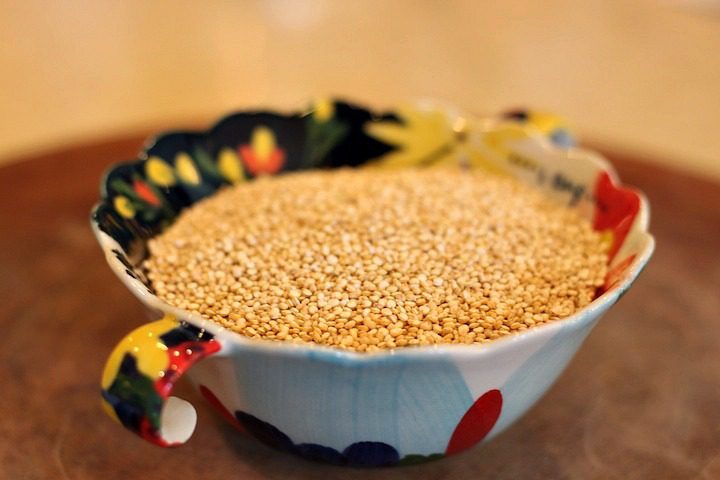
This is quinoa. High in protein, healthy fats and unrefined carbohydrates. It cooks like rice and has a mild nutty flavor. Quinoa makes a great main course or side dish and cooks in fifteen minutes. You can pretty much put anything you want in it!
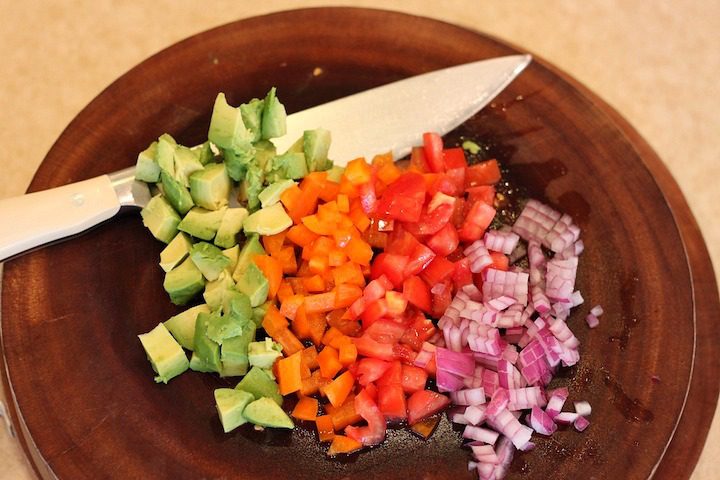
I add diced avocado, orange bell pepper, tomato and red onion, cilantro, fresh lime juice and Maldon Sea Salt! That is my amazing Wustof 8″ Chef’s knife, my most used kitchen tool!
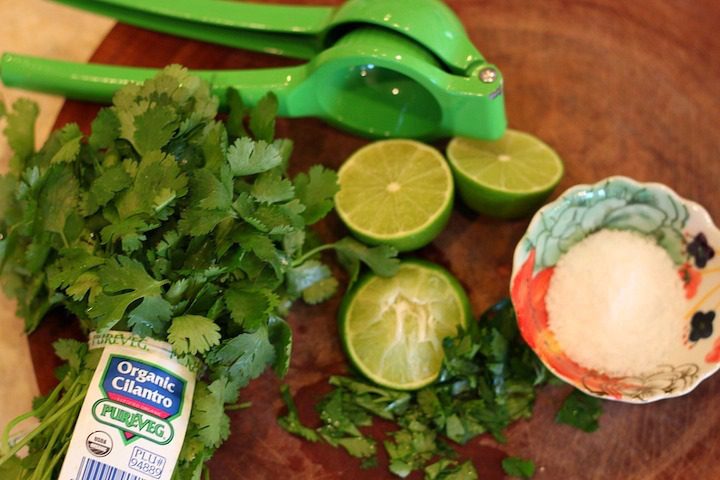
and it looks like this…
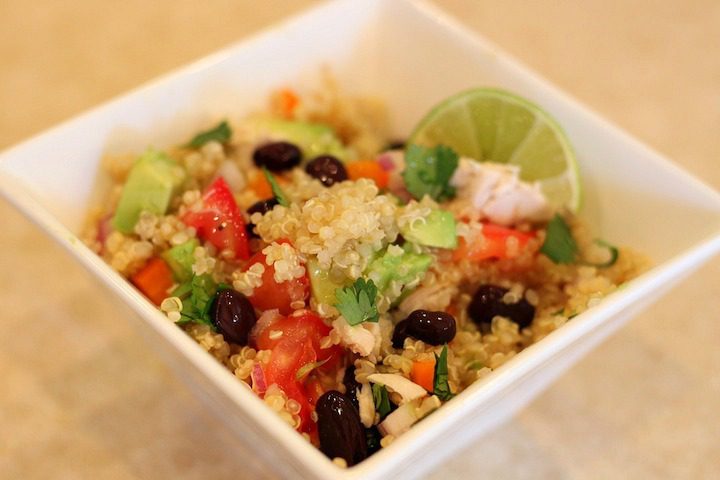
The Recipe: Lime Quinoa Chicken Salad
1 cup quinoa cooked according to package directions in 2 cups broth (chicken or veggie)
1/2 cup diced cooked chicken (optional)
1/3 cup black beans
1 small avocado diced
1/4 of one orange bell pepper, finely diced
1/4 of a small red onion, diced
1/4 cup chopped cilantro
1 small tomato, diced
3 T Olive Oil
juice of one lime
Maldon Flaked sea salt (The Organic Kitchen’s favorite salt)
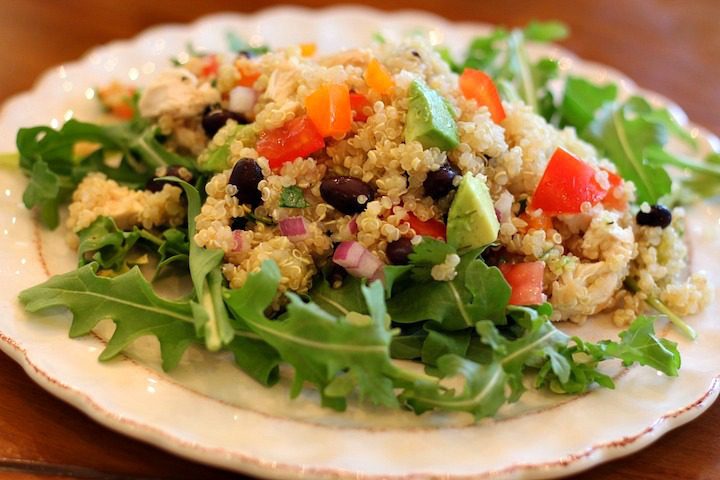
Cook quinoa, strain and place in bowl. Drizzle with olive oil and lime juice. Toss. Add sea salt to taste. Then add all other ingredients and toss. If you prefer a salad over a ‘bowl’ just lay on a bed of arugula.
For more information about ‘Healing Your Gut’ click here.
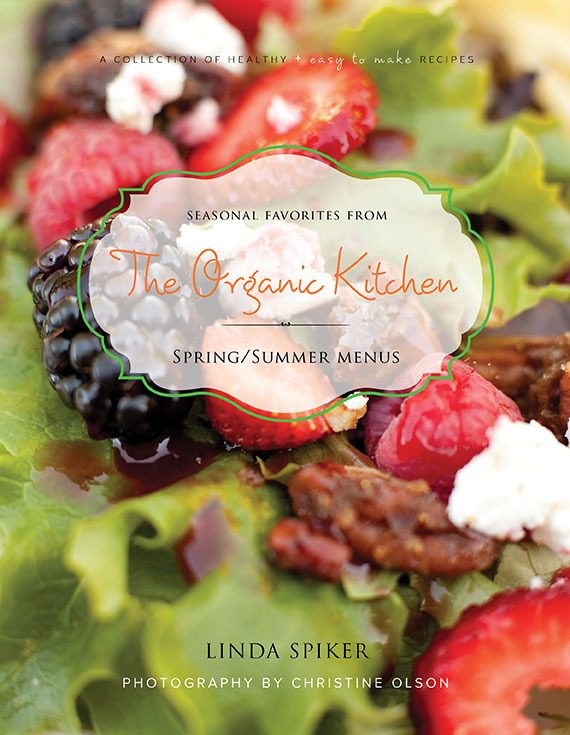
If you like this recipe please consider buying my cookbook. It’s full delicious recipes, tips and how to’s. And to purchase the amazing olive oil and sea salt used in this recipe please visit my website. PS~ my cookbook is not a gluten free cookbook but contains many recipes that are gluten free.
DISCLOSURE: I make a small profit (tiny really) from purchases made through affiliate links in this post. It allows me to keep this fabulous site up and running! Let it be noted that I only recommend products or services I have personally used myself and trust! Pinky swear!

Easy and healthy? I’m in! My kids will love this one too.
Can hardly wait to make!
Looks amazing! I shared the book giveaway on Facebook and Instagram– and I subscribed to your blog! Crossing my fingers!!
Gluten intolerance is actually an intolerance to the industrial wheat product we’re forced to eat by the commodity driven food system. An interesting link on how wheat should be grown and harvested can be found here
I tire of all the ‘gluten intolerance’ stuff that flies around these blogs. If we were actually so intolerant of wheat it never would have been known as the ‘Staff of Life’. We’ve botched it completely and are paying the price now. Cheap food isn’t cheap.
Hi Ann thanks for your comment and the link. I agree with you and actually address the fact that increased intolerance is due to the changes made to wheat by the food and farm industry. It is definitely not the same wheat our ancestors ate!